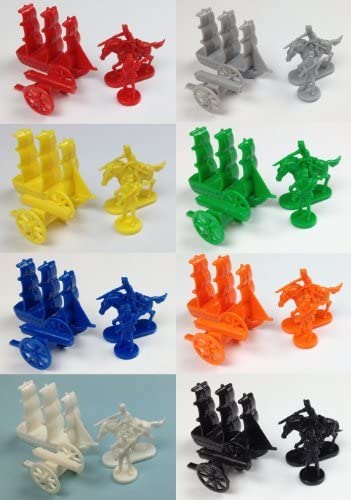
If you are interested in ordering plastic pieces separately (especially for bulk orders), please contact me at:
VIKTORY: Bazaar
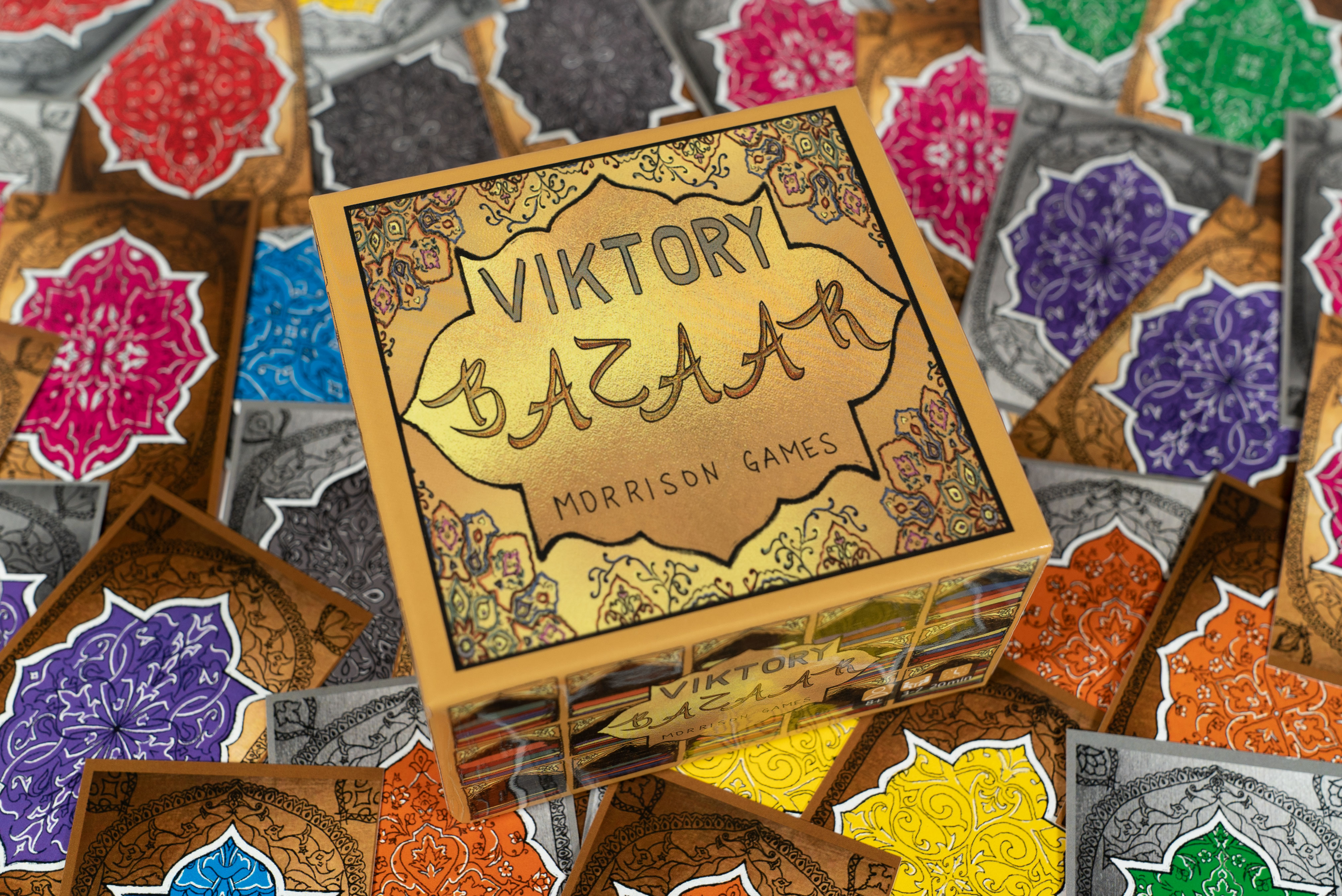
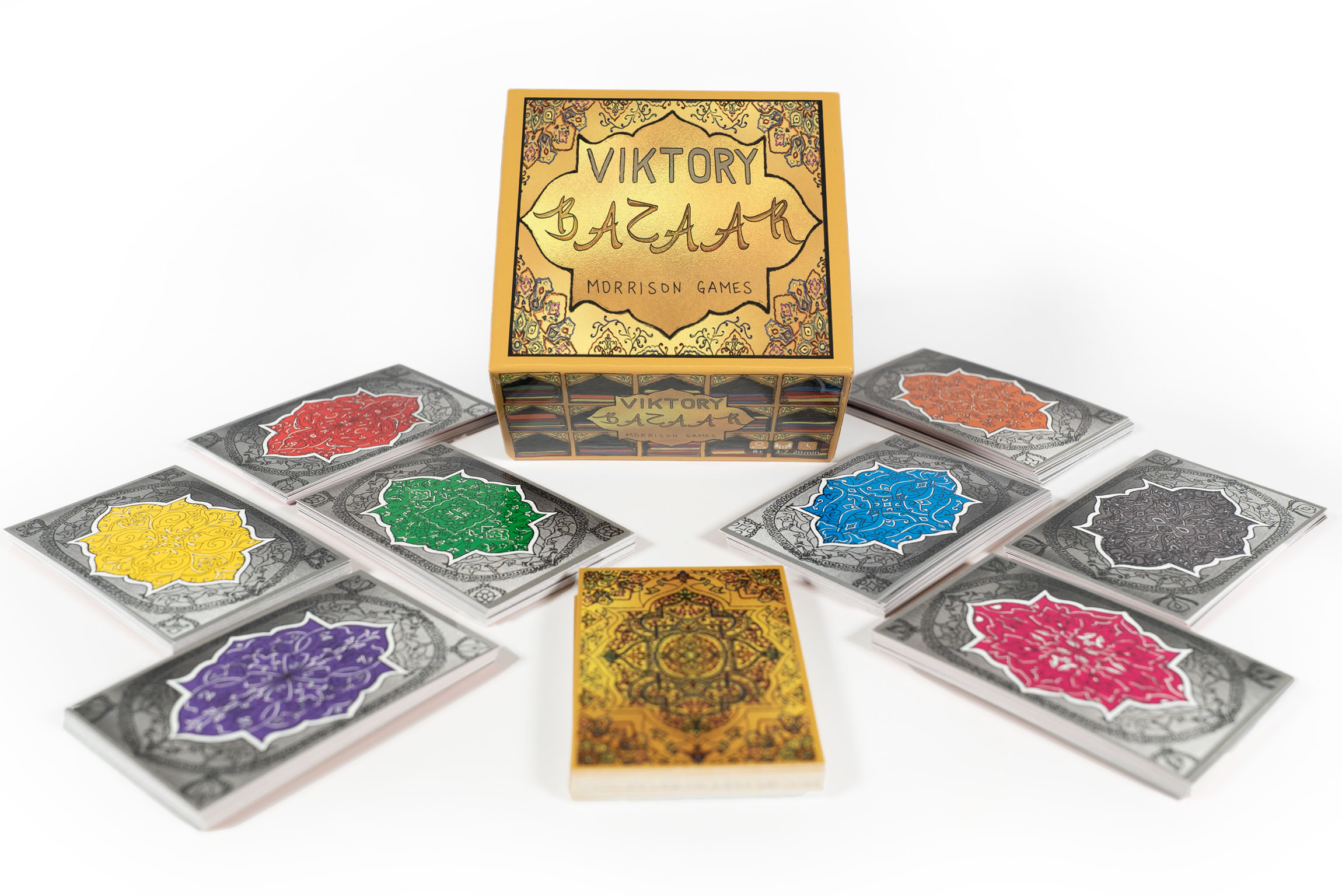
You are an Arab merchant in the Middle Ages buying rolls of silk cloth in order to complete traditional projects. Completed project cards provide VIKTORY points, and the player with the most points wins the game!
Players age 8+
Supports 3-7 players (each game also comes with the pink expansion that allows an 8th player)
Gameplay lasts 20 minutes or less
The game ends after 20 rounds. There are no turns. Everyone plays simultaneously. New rounds are beeped by a timer and players draw up to three new cards and attempt to complete projects. For newer players or larger groups, rounds should be set to 1 minute. With experienced or fewer players, rounds should be set for less time, for example, 35 seconds.
Project cards requiring more resources and rarer resources are harder to complete, but provide significantly more VIKTORY points. Once each round, a player may discard his current project card and draw a new one.
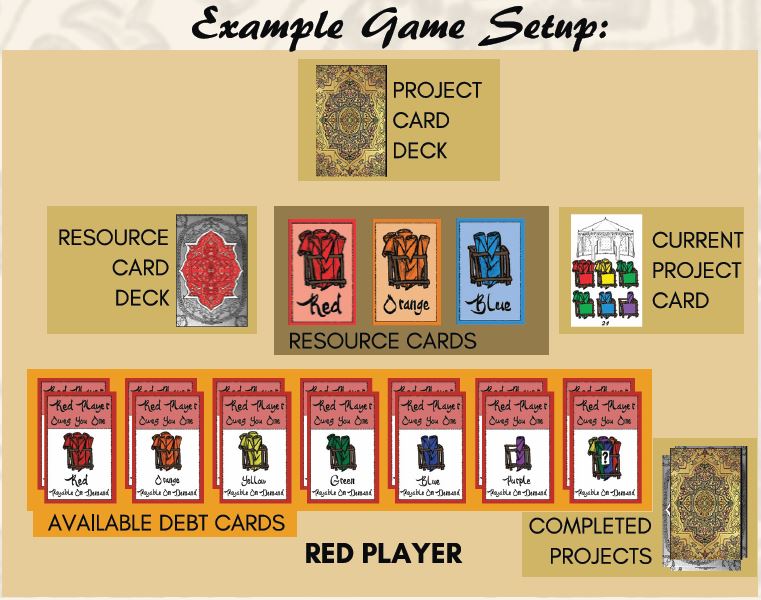
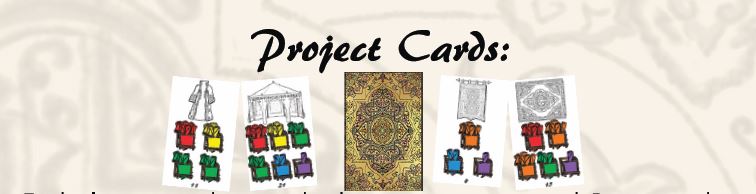
If a player has the right combination of resource cards to complete a project card, he would: 1. Collect the needed resource cards and the project card 2. Turn them facedown in a completed project stack off to the side for end game scoring 3. Draw another project card from the shared deck of project cards
There are no trade restrictions. Players can trade any combination of resource, debt, or project cards as part of a trade.
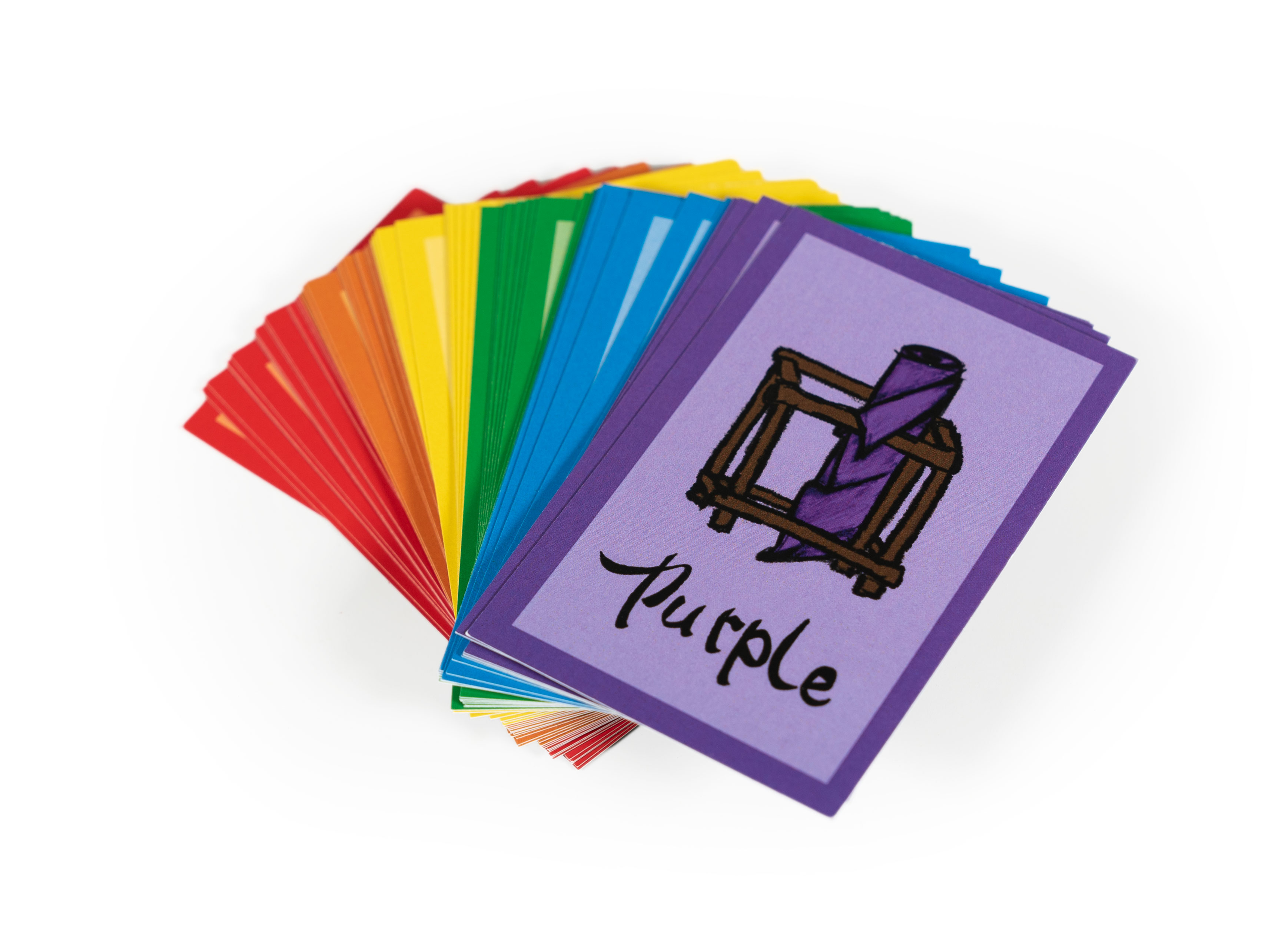
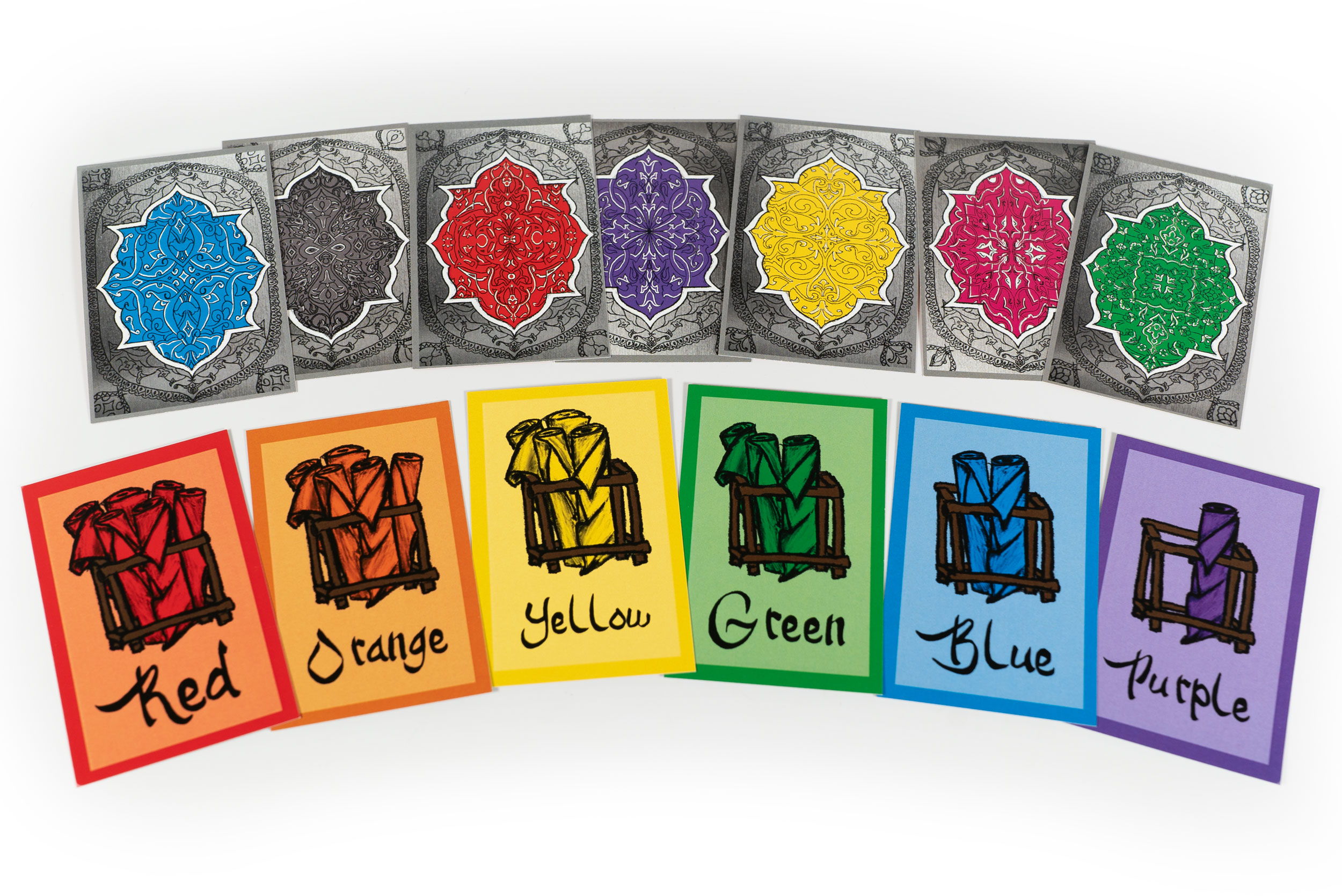
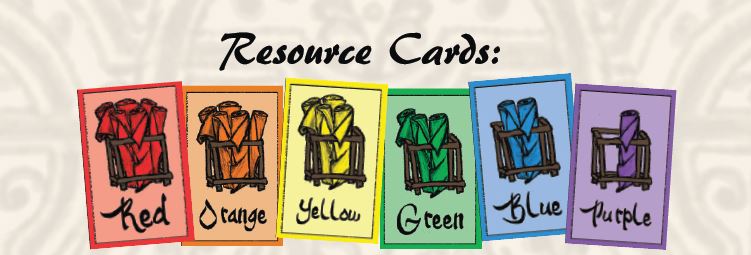
Each player starts the game with a deck of 60 resource cards, containing 15 red cards, 13 orange cards, 11 yellow cards, 9 green cards, 7 blue cards, and 5 purple cards.
Each round, every player gets to draw up to three additional resource cards (not to exceed six cards in their hand) to try to complete their project card. This can occur at any point during the round, but all of that round's resource cards must be drawn at the same time (whether 1, 2, or 3 cards). For example, a player with five desirable cards already in his hand may not draw one card, discard it, draw another, discard it, and then draw a third time. Players are encouraged to trade cards to get the resources they need.
Players cannot draw additional resource cards if it would result in more than six cards in their hand. Players may have more than six cards in their hand as a result of trades or calling in debt. Resource cards can be discarded to make room before drawing.
Each player starts the game by drawing one project card. Project cards each require a certain number of resource cards to be completed. The more resources a project requires, the more points it is worth. A project requiring rarer resources (such as purple) is worth more points.
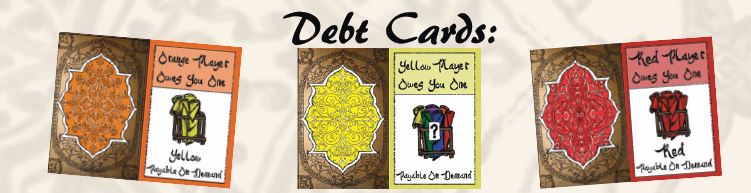
Each player has fourteen debt cards which help facilitate trade by allowing people to trade away future resource cards. A player may call in a debt at any time, up until the moment the owing player has fully placed it facedown in their completed project stack. The owed resource must immediately be fulfilled by the player who owes the debt. If two players try to cash in a debt card for the same resource, the first one to request it gets it. In the case of a tie, the player owing the resource can pick. After the last turn, debt cards are worthless.
See how the game plays in the session video below. This shows six rounds of a five player game, with each round being 30 seconds. The game is already a couple of rounds into the game when the video starts:
If you want to order a copy, please send $29.99 (which includes shipping & handling to the US) via either Paypal or Venmo. If you have an address outside the United States, please email me and I'll give you a shipping quote.
Please include your shipping address as a note with your payment.
If you have any questions, please contact me at:
Other Morrison Games
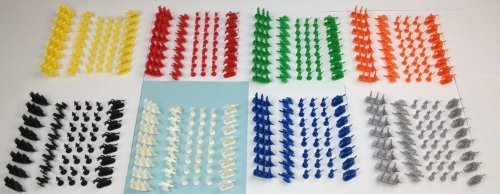
Morrison Games has previously published VIKTORY II and VIKTORY: Terror in Europe. Please click the links below to read more about those games. VIKTORY II is currently out of stock, but VIKTORY: Terror in Europe is still available for purchase.
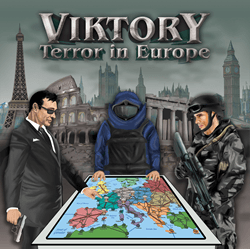
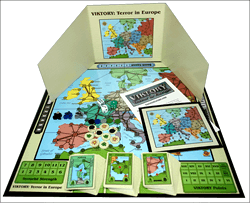
A terrorist is wreaking havoc in Europe. Every time the terrorist leaves a city there is the possibility he has left a bomb, trap, or recruiting cell. If Interpol does not find the bomb before it detonates, then the terrorist makes progress toward his goal of instilling fear across Europe.
The job of Interpol is to coordinate the efforts of Secret Agents, Bomb Squad, Special Forces, and an Informant Network to stop the terrorist from accomplishing his goal. It will take the combined special abilities of each Operative and the Informant Network for Interpol to win.
During the game, one player plays as the terrorist and tries to elude the operatives chasing him. With hidden movement cards, traps, bombs and recruiting cells to use, he tries to outmaneuver his opponents and stay one step ahead of them. The operatives goal is to catch the terrorist and defeat him in combat. Along the way, they want to avoid traps, defuse bombs, and defeat any recruiting cells the terrorist puts in their way. But the operatives have to be careful. If they get too spread out, the terrorist might attack and defeat them while they are isolated.
If you like trying to outwit your opponents, you will love VIKTORY: Terror in Europe!
VIKTORY: Terror in Europe Features Include:
Clear, easy rules that allow players to quickly start playing.
High quality custom painted meeples and wooden tokens that are durable and provide years of enjoyment.
Play as the operatives hunting a terrorist or as a terrorist on the run for two unique game play experiences.
Fast and exciting: complete games can be played in 45 minutes, with players competing for a major or minor VIKTORY®.
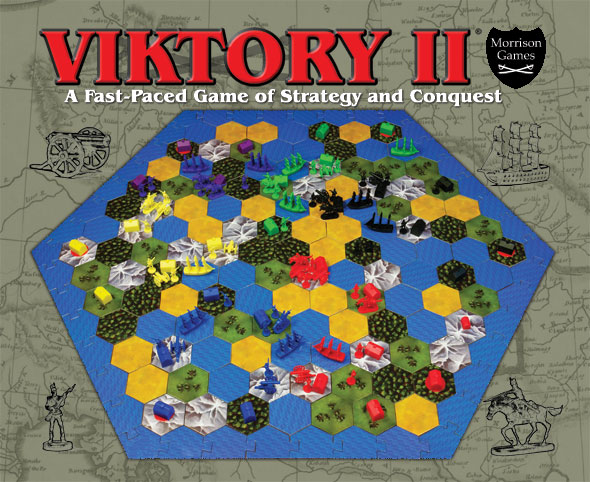
A light wargame that lasts 1-4 hours, VIKTORY II features simple rules, 782 individual game components, and an aggressive style of play that avoids inaction and turtling.
VIKTORY II is loosely based on 19th century warfare and supports up to eight players fighting for game domination, either through direct player elimination or alternately through player subjugation.
Each player has custom designed infantry, cavalry, artillery and frigate units waging war upon a modular hex map comprised of mountain, forest, plains, grassland, and water hexes. The modular map is scalable and customizable, allowing larger or smaller maps to be played for either longer or shorter games.
During the game, players explore the map by moving units and building towns and cities. When they encounter other players, fighting begins. Combat is fought through dice rolling based upon the number of different types of units engaged in battle, the terrain being fought upon, and the presence of a town or city.
The fighting units are maintained by towns and cities through a unique support system, and gained or lost as their supporting towns and cities are built or captured.
Also, if you're interested in learning more about board game design, you can click here to read a comprehensive overview of the board game design and development process associated with VIKTORY II, covering everything from the initial idea all the way through taking orders.
Axis & Allies Strategies
Click here if you're interested in learning more about Axis & Allies Strategies for Axis & Allies 2nd or 3rd edition.